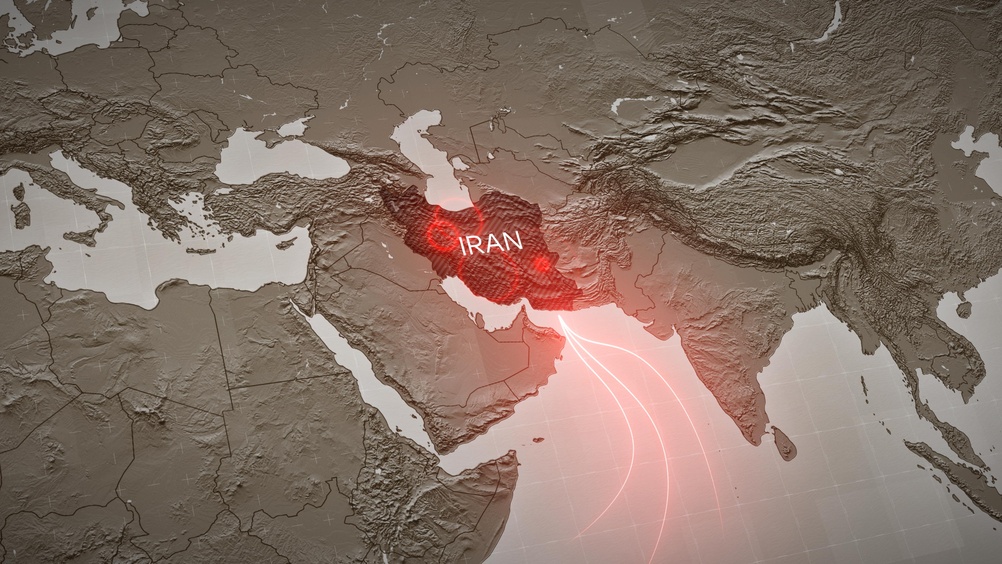
U.S. Military Action Against Iran: What’s Really Happening and Why
Editor's Note: The views and opinions expressed in this article are those of the author and do not necessarily reflect the official policy or position of Regent University, its faculty, administration, or affiliates.
Part 1
This will be a two-part series analyzing the current U.S. military action against the Islamic Republic of Iran. Part 1 assesses what is happening, why, and the most likely future outcomes of the war. Part 2 will assess how the war should be viewed from the lens of U.S. interests and Christian just war ethics.
1. Why Finding Out What’s Going On is So Hard.
One of the challenges of writing about active military conflicts is that good information is remarkably difficult to find. This is true for at least four reasons, of which two are generally applicable to almost all modern wars, and two are particular to Iran.
First, the concept of the “fog of war” is a very real thing. In general, information coming from an active war zone can be fragmentary and contradictory. Neither side is interested in sharing its strengths, weaknesses or plans with full transparency, for the good and simple reason that the other side also reads the news. Finally, it can often take time to establish what really happened, even if everyone involved is being transparent. In addition, the U.S. media is egregiously lousy at covering foreign affairs in general. American journalists generally know little and care less, assuming that their readers know, and care, even less than they do. If a newspaper dedicates a five-sentence blurb to a coup in Central Asia, it’s reasonable to assume that three of those sentences will attempt to assess the impact on the Trump administration. Additionally, in the Trump era, all political news, foreign and domestic, is filtered through the lens of what a given media outfit thinks about Trump.
There are two specific reasons why good info about the Iran conflict is hard to find. First, while President Trump’s communications style is often effective, it is certainly not disciplined or consistent. The President’s fans may love his tendency to veer off into a discussion of the Whitehouse ball room construction project in the middle of answering a question about Iran, but it does tend to muddle the message on what’s going on and why. However, part of that ambiguity may be strategic.
This leads to the fourth reason messaging is so unclear: the U.S. media and, perhaps, even the government, have been penetrated by Iranian influence in the past. The President tends to be distrustful of what he calls the “deep state” in general terms. With respect to Iran, there is some reason for distrust. During the Obama Administration, deputy national security advisor Ben Rhodes openly admitted to creating an “Iran echo chamber” in the media alongside profit “experts”. At least one of these non-profits, the National Iranian American Council, was credibly accused of coordinating its lobbying efforts with Iranian intelligence as far back as 2008. More troubling, President Biden’s special envoy for Iran, Rob Malley, has a history of hiring regime-connected people to sensitive posts, to include chief of staff to a deputy defense secretary. Even in the Trump administration, many officials from the non-interventionist wing of MAGA are connected with the Quincy Institute. Trita Parsi, one of the co-founders of Quincy, also helped found NIAC, and it’s believed the Islamic Republic views him as an asset in spreading their preferred narrative within the United States. Parsi’s brother was similarly identified by the Middle East Forum as a possible Iranian agent of influence in Sweden. In light of Iran’s penetration of media and government, the fact that low confidence but pessimistic assessments of U.S. effectiveness against Iran were leaked both in the current conflict, and after Trump’s Operation Midnight Hammer in June is concerning.
Based on all of this, and their conduct since the war began, it is my conclusion that U.S. media has a notable slant toward portraying the war as a catastrophic American defeat. That slant appears consistently across social media, traditional news websites, and even TV news. The average American, presented with such a news environment, will find it exceedingly difficult to determine what’s happening and why.
2. Why Attack Iran, and Why Now?
In assessing why, the U.S. is striking Iran now, several factors are important. First, President Trump has had a clear, consistent policy of confronting Iran since 1980. Throughout his public career, he has favored a tough line with the Islamic Republic. His opposition to President Obama’s Iran nuclear deal was a hallmark of his 2016 campaign. In his first term, he took decisive action to respond to Iranian provocations by authorizing the targeted killing of Qasem Soleimani, the commander of the Iranian Revolutionary Guard Corps. In 2024, the IRGC tried to return the favor; one of their agents was arrested for plotting to kill then-candidate Trump.
Lest we think Trump’s opposition to Iran is an outlier, it’s also worth noting that the Islamic Republic of Iran has been a consistent enemy to the United States since its inception. The regime took Americans hostage in 1979. Its proxies murdered Marines and embassy staff in Lebanon. It killed at least 600 American soldiers in Iraq through explosively formed projectiles it provided to proxies. Friday sermons in regime mosques regularly refer to the United States as the “great Satan”. Finally, they are one of the world’s most robust sponsors of terrorism. For the past 20 years, the regime has also relentlessly pursued nuclear weapons; should they succeed, a nuclear arms race in the volatile Middle East would be certain, with negative consequences that might escalate from there.
So, why now? There are at least three factors. First, Israel’s post-10/7 war eventually escalated to a direct attack on Iran during Operation Rising Lion. This attack, in which the U.S. joined during Midnight Hammer, was incredibly successful in delaying Iran’s pursuit of nuclear weapons and opening Iranian air space. However, Iran responded by instantly trying to rebuild that nuclear program. Second, as the Iranian economy has entered free-fall due to sanctions pressure and regime mismanagement, Iran was gripped by a series of widespread protests. An estimated 30,000 Iranian citizens were killed in December and January, during which time President Trump promised help was on the way. The long-standing hatred of the people for the regime is a well-known fact, accepted by all but a few pro-regime analysts and those committed to a policy of appeasing the Islamic Republic. Since 1997, protests have come from the universities, young urban professionals, the poor, women, ethnic minorities, and most recently, the merchants and owners of small businesses. Finally, President Trump appears to be making a series of deliberate moves to remove Russian and Chinese allies from the board. The ouster of Maduro in Venezuela, followed by aggressive actions in Iran, now appear as part of a broader strategy to clip China’s wings and ensure U.S. energy dominance.
There is one explanation of U.S. action that is clearly false: Israel did not put Trump up to it. Iran poses an existential threat to Israel, and the Israelis would love to see the Islamic Republic fall, thereby resetting the chessboard in the region. Yet as President Trump himself pointed out, it is more likely that Trump drove the timing rather than Israel. Contrary to the perception in the anti-Israel fever swamps, Prime Minister Netanyahu is less a rabid warmonger than a cautious Nixonian realist by inclination. But this is typical of Israel, which tends to prefer a status quo—even a highly undesirable one—over chaos. That said, when Israel commits to a conflict, unlike the United States, they tend to prefer unambiguous and decisive victory rather than protracted or unclear outcomes. In other words, Trump probably instigated this round, but Israel is very likely to push him to stick it out until an unambiguous victory is won. This may cost time, blood and treasure in the short run. In the long run, the U.S. could stand to relearn the central necessity of victory in war.
3. Where Do We Stand?
As of this writing (March 16, 2026), an observer of U.S. media could be forgiven for thinking we are on the verge of catastrophic defeat. Headlines about the war depict economic damage, strikes gone astray, the persistence of the Iranian regime, and a rudderless administration drifting without a plan. The reality is much less bleak. The United States and Israel have operated at a level of cooperation practically unseen in modern warfare, and by most estimates, have significantly dismantled Iran’s defense and security infrastructure. Whatever happens at the end of the war, the United States military now has a new—and very high—assessment of Israeli capability. That assessment is likely to reshape U.S.-Israel military-to-military cooperation for at least a decade. While it would be premature to call the campaign a success—and, in fact, assessment will likely be impossible until after the bombing is done—reports of catastrophic failure are greatly exaggerated.
Iran’s strategic response has been an attempt to cause pain to U.S. allies in the hope that said allies will persuade the U.S. to end its campaign early. This strategy has had two prongs. First, Iran has attacked U.S. allies in the Persian Gulf. Rather than leading these countries to panic and demand an end to hostilities, this effort backfired, putting at least a temporary end to the growing hostility between Saudi Arabia and the UAE in other theaters. Even Qatar, the most Islamist-leaning and Iran-curious of the Gulf countries, has taken a harder line after air strikes on its soil.
The second prong was the closure of the Straits of Hormuz, which caused a spike in global oil prices. Again, the goal has been to pressure President Trump. While it’s possible the Trump Administration was truly caught flat-footed, there is another possibility: Trump is simply not as concerned as critics think he should be. After all, while prices have gone up in the United States, American production is high enough that shortages are unlikely, and higher prices are likely to ramp up that production even higher. By some estimates, only 2% of U.S. oil imports come through the Strait of Hormuz, the worst pain for the closure of the straits will be felt in Europe, East Asia, and of course, the Persian Gulf itself. Given Trump’s long-standing desire for allies to do more, he may expect those who are most directly impacted by the closure to contribute meaningfully to the strait’s reopening. I believe the U.S. will act to re-open the straits relatively soon, but it may not be Trump’s highest priority now.
What is the end game and how long will it take? On these two issues, statements from the President have been particularly unclear. At least some of this is deliberate. It makes no sense to tell the enemy when, and under what conditions, one intends to stop fighting. However, some things can be clearly determined. First, both the U.S. and Israel have pre-determined target lists. From the U.S. perspective, the focus appears to be Iran’s military industrial complex. Israel, by contrast, has hit more regime-related targets, from the supreme leader to checkpoints of the Islamic Republic’s internal repression forces. Thus far, the U.S. has not committed to destroying Iran’s oil infrastructure. That said, it’s worth keeping our eyes on Kharg Island, a coral atoll 15 miles off Iran’s coast through which 90% of the country’s oil exports pass. Seizing Kharg would put the U.S. in an excellent position to deny the regime resources and, hence, determine the eventual outcome of the war.
There is one actor that has remained quiescent thus far: the Iranian people themselves. There is actually a very good reason for this. From Trump to Netanyahu to the exiled opposition, the message has been clear: now is not the time to rise up, but it’s coming soon. It is highly likely that when the U.S. ends air strikes, the Islamic Republic regime will technically still be in power. At that point, the people themselves will dictate the pace of events. The U.S. and Israel will almost certainly retain control of the skies over Iran. A popular uprising that might not succeed on its own would have a much higher likelihood of success with air support from the U.S. and Israel. In this case, the U.S. might be the secondary player, since Israel’s intelligence penetration of Iran is almost certainly deeper than ours. Additionally, Israel is, unusually, more committed to regime change than Trump. The President seems comfortable with a Venezuela scenario in which a lower-level regime figure takes power and does what the U.S. wants. If the Israelis seem opposed to this scenario, it’s probably because they are skeptical that such a person exists.
While regime removal is ideal from Israel’s perspective, President Trump’s victory condition might be described as strategic dominance. If Iran’s military and security apparatus is degraded to the point that they are unlikely to pose a significant threat to the U.S. and its interests in the foreseeable future, and if he leaves the U.S. in position to control future outcomes in Iran, Trump will probably be satisfied. From that perspective, destruction of all nuclear facilities, serious degradation of Iran’s military and defense production infrastructure, and control of Iran’s ability to export oil would be a smashing success. Even one of these three achievements would be a worthy outcome. Failure to achieve any of these objectives would lead to yet another unresolved conflict in which future military action against Iran would be likely. In terms of timing, initial estimates that major air strikes would end by March 31 are probably off by at least a few weeks. While it’s anyone’s guess, sometime in April is the most likely end date.
Of course, future projections about the conflict remain speculative. What we know for sure is that popular reporting of the war has been egregious at best and misleading at worst. For those interested in accurate information, the daily briefings by the Institute for the Study of War and the Critical Threats Project at the American Enterprise Institute are probably the best available sources. This article is hardly an exhaustive treatment of the subject but, hopefully, provides some context for the ethical discussion of the war in part 2.