When Titans Clash: Trump vs. Musk and the Future of Conservative Unity
Editor's Note: The views and opinions expressed in this article are those of the author and do not necessarily reflect the official policy or position of Regent University, its faculty, administration, or affiliates.
What happens when the egos of the world’s most powerful man and the world’s richest man collide?
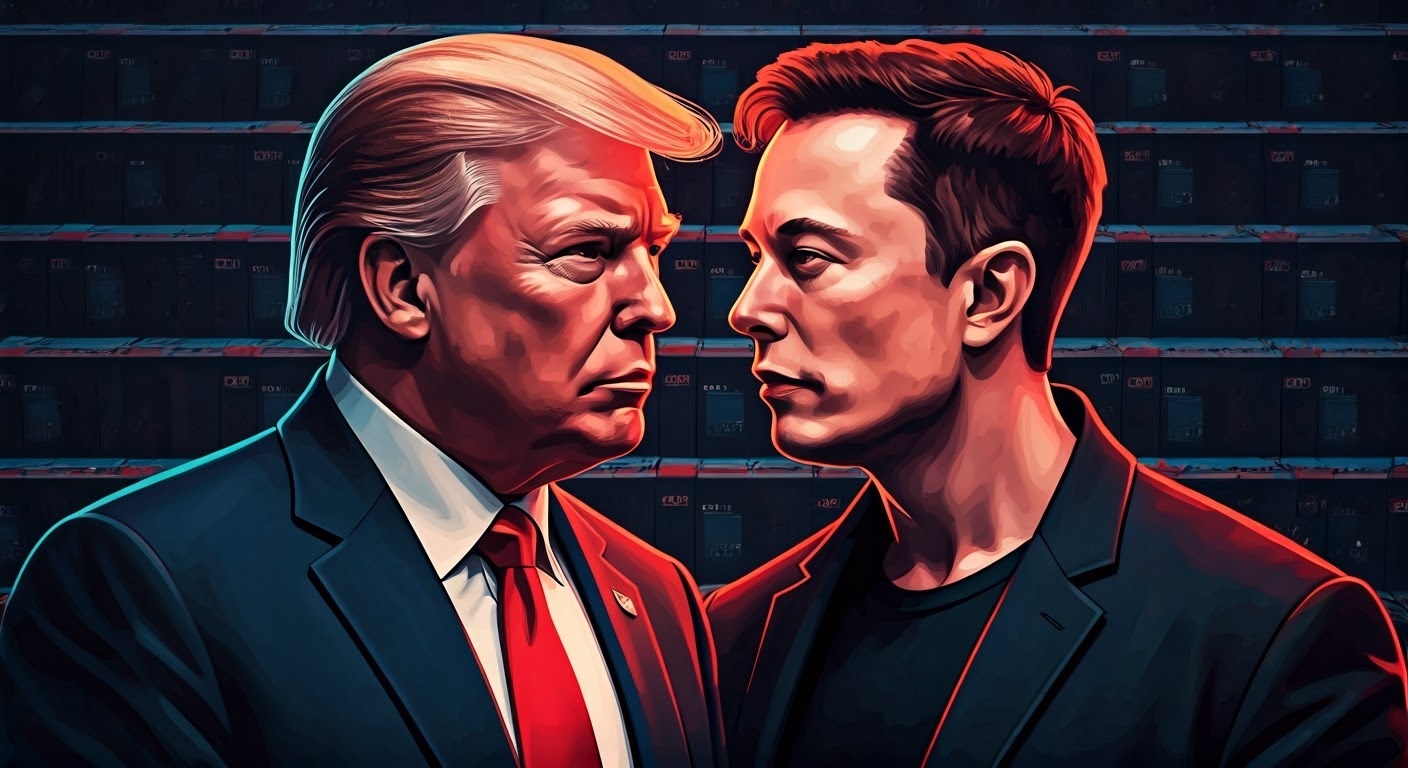
The ongoing feud between President Donald Trump and tech billionaire Elon Musk is no mere celebrity spat. It’s a culture-shaping conflict between two of the most influential men on Earth. One commands the loyalty of millions through his “Make America Great Again” (MAGA) agenda, and the other frames the future through innovation, capital, and cultural clout. To many in the conservative movement, watching these two titans publicly bicker is like watching their parents fight — deeply unsettling, somewhat childish, and almost impossible to ignore.
As Christians committed to biblical truth and national renewal, we’re compelled to ask: What happens when pride, power, and influence collide on the public stage? Regent University’s Center for Christian Thought & Action (CCTA) examines three important questions regarding the Trump vs. Elon feud: Who wins, who loses, and why biblical reconciliation is the antidote for Christians when conflict undoubtedly arises.
A Clash of Egos
Donald Trump, the 45th and 47th President of the United States, represents the political engine of the MAGA movement. His rise to the Oval Office was a rebellion against the D.C. “establishment,” elite institutions, and moral drift of our age. Many evangelical Christians view Trump as a flawed yet impactful figure, believing his presidency disrupted corruption and emphasized national sovereignty.
Elon Musk, the world’s richest man and owner of X (formerly Twitter), Tesla, SpaceX, and xAI stands for technological mastery and the power of unbridled free speech. Musk often takes stances that resonate with some conservatives, such as advocating free speech and critiquing mainstream media. His X platform has amplified many Christian and conservative voices that, otherwise, would be excluded from mainstream discussions.
When these two giants turn on each other — over influence, loyalty, ego, or whatever — the conflict sends shockwaves through the broader movement they each champion and help sustain.
Who Wins?
In the short term, neither. No family likes seeing their parents fight.
Trump’s base remains largely unaffected by Musk’s disapproval. The former president’s influence isn’t algorithmic; it’s emotional and spiritual. His ability to maintain support despite criticism has only strengthened his connection with his base.
Musk, on the other hand, is shaping not hearts but minds — designing the digital battlegrounds where culture is formed and fought. He wins influence over time through infrastructure and innovation, not political rallies.
So who wins? Ultimately, prolonged conflict can undermine movements and erode progress toward shared goals, leaving room for opposing forces to advance.
Ecclesiastes 4:12 (NIV) reminds us, “A cord of three strands is not quickly broken.” But when cords unravel due to pride and posturing, both strength and strategy suffer. Unity is not weakness; it is power rightly channeled.
Who Loses?
First and foremost, the conservative movement. Not because one man is right and the other is wrong, but because division is always costly.
Secondly, America loses. With institutions crumbling and trust evaporating, our nation needs leaders — not just in politics, but in business, technology, and media — to work together for the common good. We need statesmen, not showmen.
Finally, young people lose. They’re watching. When the so-called “champions of free speech and truth” devolve into digital jabs and sarcastic rhetoric, the next generation learns that ego matters more than integrity and humility.
“Know this, my beloved brothers: let every person be quick to hear, slow to speak, slow to anger” James 1:19 (ESV)
What Does the Bible Say?
Proverbs 13:10 declares, “Where there is strife, there is pride, but wisdom is found in those who take advice.” This feud is ultimately a pride problem. Both Trump and Musk, despite their different styles, struggle with the same vice that plagued King Saul, Nebuchadnezzar, and even Peter before Pentecost — pride in one’s own power rather than submission to God’s.
1 Peter 5:5 tells us, “God opposes the proud but shows favor to the humble.” The winner of this conflict will not be the man who gains the most followers or lands the hardest punch. It will be the one who chooses humility over hubris.
Is Reconciliation Possible?
Yes, but it will require both men to embrace biblical values — even if they don’t call them that. Trump must model strong restraint by speaking less like a warrior and more like a statesman. Musk must resist the temptation of provocation and lead with clarity and courage, not just curiosity.
More importantly, we as Christians must pray. In 1 Timothy 2:1-2, the apostle Paul urges us to pray “for kings and all those in authority, that we may live peaceful and quiet lives in all godliness and holiness.” If we want peace, we must be peacemakers. If we want unity, we must be unifiers.
Donald Trump and Elon Musk are just men; flawed, fallible, and in desperate need of repentance and grace.
Conclusion
The fight between Trump and Musk can be seen as more than just a political feud. It may be a test: Will we, as believers, worship at the altar of personality and power, or will we seek the higher ground of wisdom and unity?
Colossians 3:15-17 says, “Let the peace of Christ rule in your hearts, since as members of one body you were called to peace. And be thankful. Let the message of Christ dwell among you richly as you teach and admonish one another with all wisdom… And whatever you do, whether in word or deed, do it all in the name of the Lord Jesus, giving thanks to God the Father through him.”
The world is watching, and so are our children. May this conflict not be remembered for who won the argument, but for who humbled himself enough to end their feud.