Iran’s Child Soldiers: Why 12-Year-Olds Are Now Serving in War — and Why the World Is Silent
Editor's Note: The views and opinions expressed in this article are those of the author and do not necessarily reflect the official policy or position of Regent University, its faculty, administration, or affiliates.
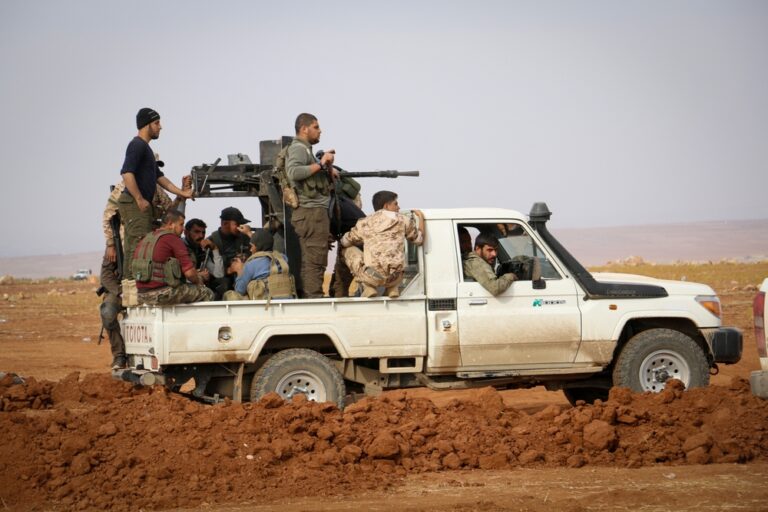
Children can now fight for Iran. Not teenagers, nor those who are almost eighteen — 12-year-olds! “Iran’s Islamic Revolutionary Guard Corps (IRGC) has lowered the minimum age for participation in war-support roles to 12, a senior official acknowledged on state television, in remarks cited by the Iranian news channel Iran International.”
How desperate is the nation that puts its children to war? These 12-year-olds will join the IRGC forces by manning checkpoints and patrols repressing Iranian citizens. The move comes despite Iran’s commitments under the Convention on the Rights of the Child (CRC), which expressly and outright prohibits the use of children in military activities. What heartbreaking calamity!
Child soldiering is a problem around the world, particularly with CRC signatory nations in conflict, because desperate regimes recruit children for their easy obedience, attracting them with ideology and the perception of community strength they might gain from soldiering. Children in poverty who lack opportunity and education are easy targets.
(See my research on this at Suffer the Children: How the United Nations Convention on the Rights of the Child Has Not Supported Children, 22 N.Y. Int’l. L. Rev. 57 (2009); and A Brief Assessment of the 25-Year Effect of the Convention on the Rights of the Child, 23 Cardozo J. Int’l. & Compar. L. 323 (2015).
Furthermore, having 12-year-olds join the IRGC defies the United Nations treaty authority enforcement. In truth, enforcement has always been a weakness of the CRC, as the plight of children all over the world by CRC signatory states is not improving. This “triumph” of international law has enjoyed little success for the rule of law in the lives of children. This new decision by the IRGC is clear evidence of that.
While working on my sabbatical-project casebook, Children and the Law, my mind immediately rushed to its focus: trauma-informed lawyering on behalf of children. When children experience adverse childhood experiences (ACEs), they endure some level of trauma as they grow up. Offering a new and pragmatic perspective, this casebook covers not only essential theory and practice, but it also accommodates expected law-student demands for various expertise in child advocacy, particularly dealing with children who have experienced trauma.
Having contact with the law in nearly any form can create a traumatic experience for a child. This casebook is designed to prepare and train lawyers, both experienced and new, in the rising interest toward the involvement of children in the law. Recognizing that a new approach is needed in this area of law and child advocacy, our goal is to provide a tool that will teach in an interesting and engaging manner by offering a fresh perspective on the subject matter with a balance of practical training and tools. It is scheduled for publication in Fall 2026.
So, as abhorrent as the notions of children serving in a war in any capacity are, the trauma they experience in that service will affect them vividly and dramatically for their entire lives — if they survive their wartime service. The IRGC is showing its true colors with the value they place on children, and the CRC is not protecting these children from child soldiering, despite express prohibitions that Iran has agreed to.
Nearly 200 nations have signed the CRC treaty, with the United States as its only U.N. non-signer. While often debated in legal circles, the reasons for U.S. refusal to sign the treaty are held in our Judeo-Christian beliefs, which value children. Among the weakest and most vulnerable citizens, girls and boys deserve protection of their best interests, with their parents holding the greatest rights and the serious duty to do so.
The IRGC is another tragic example of the failure of the CRC. While numerous Middle Eastern news outlets are reporting this heinous step taken by Iran to enlarge its army, Western media are seemingly and shamefully silent on this latest use of child soldiers. Understanding rights and obligations and communicating them accurately will always be a heavy task, but ignoring facts is never good — and it can be tragic for children.
Rooted in Jewish tradition as a gift from God (Psalm 127, 128), valuing children was passed to Christianity by Jesus in the New Testament (Matt. 19:14, Mark 10:14, Luke 18:16). Finding faith in Christ brought a new and unfamiliar respect for children to the early Church. In time, Christianity has brought an even more compassionate view of children to the law, which has manifested in the United States as a legal and statutory standard, in the best interests of every child.
Recognizing every child’s worth has become part of the fabric of our nation. In many ways, it sets America apart from many other countries around the world, especially in Iran, because 12-year-olds should never serve in war in any capacity.
Support Regent
Every day at Regent University, our students prepare to serve with wisdom, conviction, and faith in their communities, churches, professions, and public life. By coming alongside us, you make that work possible. Your generosity sustains the scholarship, teaching, and formation needed to equip the next generation of Christian leaders to change the world for God’s glory.