A New Middle East? How Israel’s Post-10/7 War Reshaped Regional Power Dynamics
Editor's Note: The views and opinions expressed in this article are those of the author and do not necessarily reflect the official policy or position of Regent University, its faculty, administration, or affiliates.
Israel’s post-10-7 war could change the region.
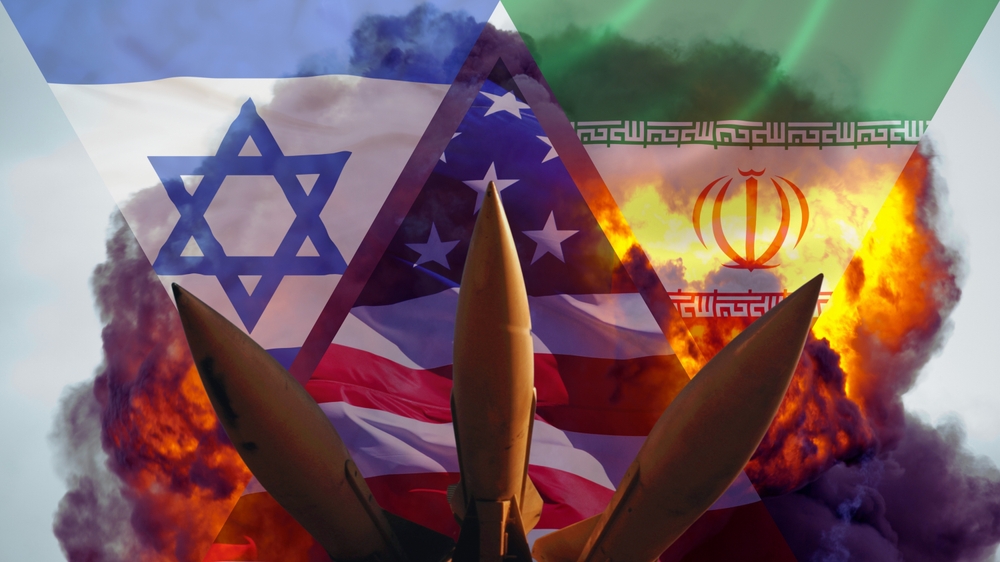
The joint U.S. and Israeli operation to destroy Iran’s nuclear program can only be described as stunning. At the beginning of the 12-Day War, Israel demonstrated its total military superiority over the Islamic Republic of Iran, which has been dedicated to the destruction of both Israel and the United States since 1979. Near the end of the 12-Day War, the United States demonstrated once and for all that our conventional forces can do irreparable damage to even the most hardened nuclear facilities of our enemies. Russia, China and North Korea, take note.
While the deterrence impact of U.S. nuclear strikes remains to be seen, we are already witnessing the regional repercussions of the 12-Day War, and the post-10-7 conflicts between Israel and Iran’s proxies. Because, of course, the strike on Iran’s nuclear program came at the end of a systematic campaign that toppled Iran’s web of proxies one by one. Now, in the aftermath, we can see the possibility of a new balance of power taking shape in the Middle East.
As of this writing, much of the post-10-7 balance of power remains undetermined, but there are some things we can say with relatively high confidence. First, as concerns conventional military power, Iran has been revealed as a paper tiger and its system of proxies has been substantially weakened. In and of itself, this is already the biggest geopolitical shift in the region since 1979. Iran’s chief proxies were the Assad regime in Syria and Hezbollah in Lebanon. The former is entirely gone, while the latter has been so badly weakened that the Lebanese Armed Forces are making very serious noises about disarming them. For all its good intentions and nominal support for the international community, the possibility of the LAF actually disarming Hezbollah was not deemed credible by virtually any Middle East analyst before October 7, 2023. Iran’s allied Iraqi militias have proven less willing to do Tehran’s bidding than they hoped, and while the Houthis remain, they are on the margins of the Middle East in many ways.
The second thing we know for certain is that Israel has been confirmed as a regional military power. For a small country, Israel punches well above its weight in capability, holding an unmatched regional record in conventional conflict. It seems very unlikely that any potential adversary will want to risk a conventional war of any sort with Israel in the near-to-medium-term. Israel’s weakness is with asymmetric conflict, such as the mission in Gaza that looks distressingly like counterinsurgency from an Israeli perspective. Israel has neither the desire nor the capacity for a long-term, low-intensity conflict in a place like Gaza. Eventually, this reality will force Israeli strategists and policymakers to grapple with a series of less-than-optimal policy options. In short, Israeli Prime Minister Benjamin Netanyahu has succeeded, beyond his wildest dreams, in resolving the broader regional conflict. But the Israeli-Palestinian conflict remains, and Israel will need help from its new Arab allies to clear terrorists, de-radicalize Palestinian populations, and build a better future for everyone living in the Holy Land.
Right now, several things remain uncertain. On the hopeful side, momentum appears to be building toward normalization between Israel and some of its neighbors. Much of the chatter in Washington and Jerusalem revolves around normalization with Saudi Arabia. This would be a game-changer, not just for the Middle East, but the world. Diplomatic recognition of the Jewish state by the custodians of Islam’s two holiest shrines would be an epochal event in Middle Eastern and world history. It would also put the Islamist bullseye squarely on Crowned Prince Mohammed Bin-Salman. For that reason, the process may move slower than optimists’ hope. Likewise, there is optimism about Syria and even hope for Lebanon. One must be cautious about both states, but Lebanon and Israel have a compelling common interest in disarming Hezbollah. As that is accomplished, it’s possible Lebanon could actually be the first domino to fall.
The path for Syria is more complicated and points to the next great uncertainty about the Middle East’s balance of power. Syria’s interim president Ahmed al-Sharaa has been heavily courted by President Trump and the Saudis with promises of economic investment in exchange for joining the Abraham Accords. But al-Sharaa’s calculus is quite complicated. On one hand, Syria has not recognized Israel’s annexation of the Golan Heights, which has been formally under Israeli sovereignty since the early 1980s. Recognition of this established fact on the ground would put al-Sharaa in jeopardy from hard-core Sunni jihadists. By contrast, Lebanon’s border disputes with Israel are very few, which may ease the pathway to normalization. Second, recent conflicts between Bedouins and the Druze, in which the government in Damascus has opposed the latter, run the risk of causing a breach. For humanitarian and practical reasons, Israel has a vested interest in defending the Druze community, whom many of al-Sharaa’s backers regard as un-Islamic heretics and jihad targets.
Finally, al-Sharaa and his coalition have considerable ties to the Sunni Islamist-friendly Turkey-Qatar alliance, which is unlikely to view normalization with Israel favorably. It’s no secret that Turkey and Qatar have sought to play both sides against the middle in the Saudi-Iran Cold War that defined Middle Eastern power balancing from 2000 to the 10-7 attacks. In a conference presentation in 2018, I described this strategy as “ideational triangulation” and argued that Erdogan, in particular, naturally gravitates to such a strategy. Now, Turkey and Qatar have an opportunity to seize the mantle of Islamic resistance from Iran. In some ways, a revisionist movement led by Turkey and Qatar will be less overtly dangerous to Israel, the moderate Arabs, and the U.S. These two Sunni powers are likely to try and keep at least one foot in the pro-Western camp, even while backing Sunni Islamist extremists in other countries. Also, they are likely to be more strategic, and the fusion of Sunni Islamism with Ottoman revanchism could be a dangerously compelling ideological narrative.
Finally, the greatest unknown right now is the Persian puzzle. How badly has Iran been damaged? What are the prospects of regime survival? And what are the best- and worst-case outcomes for the future? From the perspective of the U.S. and her allies, the best-case scenario is probably something analogous to the Eastern Bloc countries in the 1980s. Through careful diplomatic work, the U.S. was able to support a nascent opposition movement. The exhausted regimes cracked from within, though in some countries, elements of the old regime abandoned Communism but still played a substantial role in the life of the country. The worst-case scenario is that the regime is bruised, but not defeated, and dedicates itself to sponsoring terrorism to a greater degree. Unlike its conventional efforts, the Islamic Republic is quite competent at disinformation, influence operations, and support for international terror organizations. Should the regime survive, they now know, as their ideology has always claimed, that America is their chief antagonist. A case in the middle, but one with dangerous possibilities, is some sort of civil war or protracted conflict. This would be very bad for the Iranian people, but an Iranian regime seeking to validate its ideology is very likely to pursue terrorism or similar disruptive strategies against the U.S. and our allies. From an American perspective, then, regime persistence could be worse than a civil war.
Iran’s ultimate fate has geopolitical implications that extend beyond the Middle East. On one hand, the fall of the Islamic Republic could lead to a realignment, in which Iran joins the growing economic block stretching from Israel to the Persian Gulf to India and tied to the United States. In this scenario, Iran would be poised for stunning economic growth, a status-quo orientation toward the Middle East, and a pivotal role in what could be an Indo-American modus vivendi that keeps China well in check. By contrast Iran, like Russia, will be more firmly wedged to China, as an economic client state, and a thorn in the side of America’s global strategic interests, if the Islamic Republic survives. More than any other country in the region, Iran’s unique geographic position means its fate will have direct relevance for great power competition: It will either be a cog in the belt-and-road initiative or a link in the Israel-Gulf-India energy super-highway.
As of this writing, much remains unclear. It could be that a new balance will emerge that is decidedly more favorable both to Israel and the United States. In such an eventuality, widespread normalizations and Iranian transformation will create a new balance in which pro-peace countries have a decided advantage, and the revisionists are more of a long-term concern than an immediate danger. On the other hand, Iran and the Sunni revisionists might strategically compete, fighting one another, while mutually undermining Israel and the moderate Sunni Arabs. To be sure, this is almost certainly a more manageable challenge for Israel than the pre-10-7 environment. And even in this scenario, the U.S. has demonstrated it is back in the deterrence business—and not afraid to support its allies.
On the whole, the strategic balance in the “new” Middle East is tilting toward America, Israel, and their allies. The Islamic Republic’s ambitions have been curbed, her proxies are weakened, and her future mischief-making will, of necessity, likely remain asymmetric. Yet, even in the best-case scenario, Israel and the U.S. will have antagonists in the region. The Middle East will likely be more peaceful after the post-10-7 war, but “more peaceful” does not mean fully at peace.