When Faith Faces Tragedy: A Christian Response to the Hunt, Texas Flood
Editor's Note: The views and opinions expressed in this article are those of the author and do not necessarily reflect the official policy or position of Regent University, its faculty, administration, or affiliates.
How can a kind and loving God allow dozens of innocent children, devoted to Jesus, to perish in Hunt, Texas?
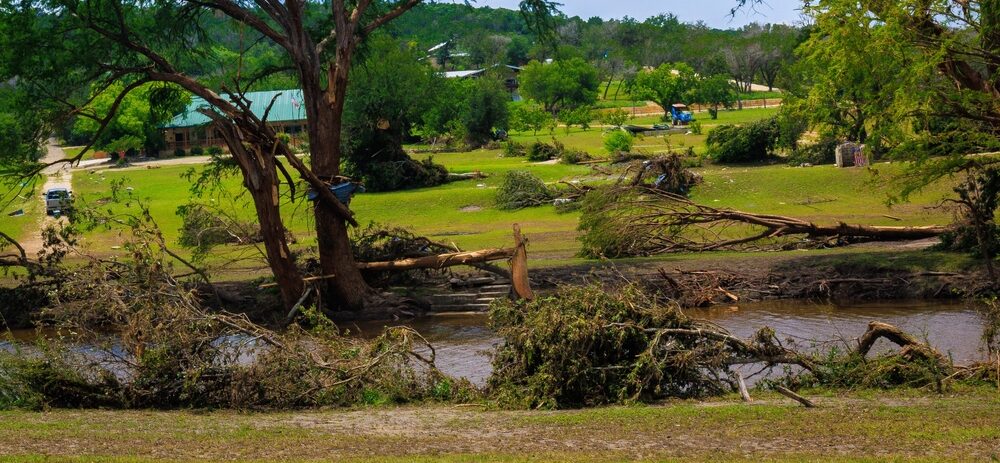
On July 4, 2025, a horrific flash flood — spurred by record-setting rainfall — rushed through Hunt, Texas, sweeping away cabins at Camp Mystic, an all-girls Christian retreat along the Guadalupe River. Torrential rains — up to 6.5 inches in three hours — caused the river to surge more than 22 feet in just two hours, overwhelming any warning or evacuation efforts.
At least 27 campers and counselors at Camp Mystic died, several of them eight‑year‑olds, including twin sisters. These young believers’ lives had been marked by faith and innocence. Six days after the floods, Kerr County officials reported at least 120 fatalities, including 36 children, and more than 160 people still unaccounted for.
The Eternal Question: Why Innocent Children?
This is a constant struggle for believers: Why does God allow innocent suffering? When tragedy strikes God’s little ones — children who knew and trusted Jesus — the questions become more agonizing: Is God unloving? Is He distant, or could there be a deeper truth woven into the fabric of our suffering?
Regent University’s Center for Christian Thought & Action is responding to the Texas tragedy with encouragement and faith. The eight points below reflect a biblical and spiritual response to this tragedy — and to others we may face in the future. We pray they help believers move forward in victory after experiencing profound grief and loss.
1. The Biblical Reality of a Fallen World
Scripture teaches that we live in a fallen world. Genesis 3 recounts the entrance of sin, ushering in disorder, decay, and death — not because God desired it, but because He gave us the freedom to rebel. Earthquakes, floods, disease — all are amplified consequences of that fallen state (Romans 8:22).
God didn’t promise a pain‑free existence; instead, He holds out a better reality — eternal salvation and restoration in Jesus Christ (Revelation 21:1–4). The flood in Hunt, Texas, as shocking as it was, does not contradict God’s nature; it illustrates the brokenness of our world.
2. Divine Suffering Meets Human Pain
In Jesus Christ, God Himself entered our suffering. The Incarnation — God made flesh — shows that He did not stay distant from our pain, even unto death on a cross. Rev. Billy Graham delivered a powerful, inspirational speech during the national memorial service four days after the horrific Oklahoma City bombing. The domestic-terror attack killed 19 children at a daycare center inside the Alfred P. Murrah Federal Building on April 19, 1995.
“What are some of the lessons that we can learn from what has happened?” he asked. “First, there’s a mystery to it. I’ve been asked why God allows it. I don’t know. I can’t give a direct answer. I have to confess that I never fully understand — even for my own satisfaction. I have to accept, by faith, that God is a God of love and mercy and compassion — even in the midst of suffering.”
Though Rev. Graham’s speech followed a different disaster, his words ring true today, as well. Even a god of love and mercy can allow terrible things to happen. Tragedy should drive us to seek God’s comfort, His peace, and His presence.
3. God’s Presence in Our Pain
James 1:2-4 tells us to “consider it pure joy… whenever you face trials of many kinds” because they produce perseverance and maturity. That doesn’t mean we rejoice in suffering, but that even in difficult times, God is active — transforming, strengthening, and drawing us nearer to Himself.
Camp Mystic’s director, Dick Eastland, reportedly died trying to save campers and counselors — a profound act of sacrificial love echoing Christ’s own self-giving nature. Such heroism reminds us that God often works through human love in the midst of tragedy.
4. The Mystery of God’s Sovereignty
Theologians affirm that not all suffering’s reasons are revealed to us (Deuteronomy 29:29). God is sovereign, even when we cannot understand. Even in loss, we must trust God, who “works all things for good for those who love Him, who have been called according to His purpose” (Romans 8:28). While this promise can feel cold in the early stages of grief, it calls us to a faith rooted in God’s character, not our circumstances.
5. Our Role in Earth’s Brokenness
While divine sovereignty is central, human responsibility also matters. Warning systems can be delayed or resisted. Evacuation alerts can arrive too late. In Kerr County, waters began rising rapidly before sirens sounded. Second-guessing local officials is no substitute for mourning, but it shows that tragedy often has both natural and human dimensions.
Believers in Jesus Christ are called to act compassionately — improving warning systems, caring for survivors — and to advocate for systems that protect life, reflecting the God who treasures every child.
6. Beyond Death: The Hope of Resurrection
For children who believed in Jesus Christ, His defeat of death becomes personal and profound. In John 11, He tells Martha: “I am the resurrection and the life. Whoever believes in Me… will live, even though they die” (John 11:25). While earthly death is tragic, it is not final. Christians can mourn profoundly knowing the reunions waiting for us in heaven (1 Thessalonians 4:13-14).
7. Trusting in Love Amid Loss
God’s kindness does not mean removing all grief. Christian institutions, like Regent University, understand that God is most glorified when we learn to trust Him in our deepest sorrow.
Job “was perfect and upright, and one that feared God, and eschewed evil” (Job 1:1), but God allowed him to lose his children, all his possessions, and even his health. He showed that, in tragedy, we can learn empathy, endurance, and compassion — not just for others, but also for ourselves.
In the midst of his most intense suffering, Job proclaimed: “Though He slay me, yet will I trust in Him” (Job 13:15). His story is one of the most powerful Old Testament examples of trusting God when we experience loss.
8. Building a Response of Faith
In response to this loss, believers can:
- Pray fervently for comfort and healing.
- Encourage churches and counselors to support grieving families.
- Advocate for community safeguards — better alert systems, flood planning — to prevent avoidable loss.
- Remember those lost by honoring their lives: Tell their stories. Continue their faith.
In Matthew 11:28, Jesus tells us, “Come unto me, all ye that labour and are heavy laden, and I will give you rest.” That is a call to action for all believers — both in and out of tragedy.
Conclusion
In the aftermath of the Oklahoma City bombing, Rev. Graham had a strong message of hope for every believer in Jesus. He said that questioning God in the midst of tragedy is within our human nature — and can even reflect the heart and mind of Christ:
“For the Christian, the Cross tells us that God understands our suffering, for He took upon Himself at the Cross all of our sins and all of our failures and all of our sufferings. And our Lord, on that Cross, asked the question: ‘Why?’
“‘My God, my God why hast thou forsaken me?’ And He received His answer. (Jesus) knew: To redeem the world. To save you and me from our sins. To give us assurance that, if we died, we’re going to heaven. He was saying from the Cross, ‘I love you! And I know the heartaches and the sorrows and the pain that you feel.’”
The deaths of innocent children at Camp Mystic and elsewhere are heartbreaking. So often, it can be incomprehensible from our human perspective. Yet, the Christian faith holds that these horrors do not negate God’s loving nature — instead, they cry out for the very love Christ showed on the cross. He is with us in suffering, He turns it toward redemption, and He promises ultimate restoration.
Sources: