The Economic Consequences of the 2025 Election: Virginia Edition
Editor's Note: The views and opinions expressed in this article are those of the author and do not necessarily reflect the official policy or position of Regent University, its faculty, administration, or affiliates.
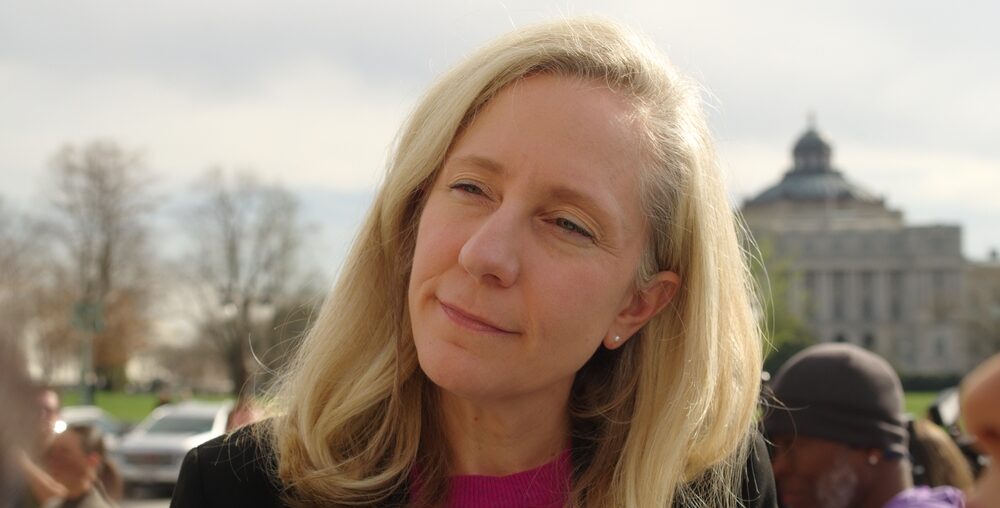
On November 4, Virginia voters (my home state) gave the Democratic Party decisive victories across the commonwealth, and elections have consequences. And while politicians are renowned for over-promising, incoming governor Abigail Spanberger has partisan majorities in both legislative chambers and a prime opportunity to get her agenda passed. So, what is that agenda?
Wading through the economic material on her campaign website[†], may be the first thing that strikes one: how many “plans” she has. She completely ignores the prescription of an earlier predecessor: that a good government is one that “shall restrain men from injuring one another, and shall leave them otherwise free to regulate their own pursuits.[‡] She makes promises such as “Prepare the next generation of Virginians for 21st-century jobs”, vague enough that no one would disagree, but no mention of what it really means. We also see promises about protecting fired federal workers, which makes sense, as it is a significant part of her voter base. If the federal workforce is reduced enough, Northern Virginia stops being a Democratic-party counterweight to the rest of the state, and her party has a harder time winning statewide elections. 88% of Spanberger’s victory margin came from Northern Virginia.
But, digging deeper we get to real proposals and they can be categorized rather conveniently.
“Free” Programs
It is fascinating how politicians use the word free. It has rhetorical advantages over the truth: government forcing others to pay for your stuff, but it is untrue. There are people on the receiving side, but everyone is also on the paying side; that is just less obvious. We must never forget that the government cannot give anything to anyone without first taking it from someone else.
For example, and there are many, her promise to sign the (free) family medical leave bill that passed the current legislature (SB 373) and is highly likely to pass again. It will, according to the legislature’s own fiscal note[§], require a new 250-employee government agency to collect increased taxes, establish and administer a medical leave insurance fund, and the initial trust fund to cover benefits and setup costs would require over $1.4 billion in the first year. There is no such thing as free.
Government Knows Best Programs
The hubris of many in government knows no bounds, they think they can design programs to manage economic activity when they do not fully understand how markets work. For example, she writes of “Address(ing) current workforce shortages, particularly in the areas of manufacturing, healthcare, education, and other high-demand occupations”. This is what wages do. If there is demand for certain talent and a shortage of that talent, wages increase and talented people respond, there is nothing government can add to this process except costs and bureaucracy. But maybe the best example is her desire to increase the state minimum wage to $15 an hour, another bill that passed the outgoing legislature and is sure to pass again.
Minimum wage, popular with many, is an insidious and counterproductive law. If well-intended, then it displays a breathtaking level of economic ignorance because to support the minimum wage requires one to suspend the obvious truth: when prices increase, demand decreases. Numerous economic studies agree that the minimum wage contributes to unemployment, especially among low-skilled and minority workers. A 2021 Harvard study of California’s minimum wage increase found that “For every $1 increase in the minimum wage…the average number of hours each worker worked per week decreased by 20.8%. For an average store in California, these changes meant that the total wage compensation of an average minimum wage worker in a California store actually fell by 13.6%.”[**]
The studies of Virginia disagree only in their estimates of how many jobs will be eliminated with a midpoint range being 34,000-57,000 a year.[††] But, in addition to job loss, there are other costs often overlooked. An increase in minimum wage could drive up prices for labor-intensive production such as childcare and food service. Heritage Foundation reports that childcare will increase by $4,736 annually with a $15 minimum wage.
Fantasy Land
Finally, catering to the special interest groups in her party. Nowhere is that more obvious in the Democratic Party than their devotion to alternative energy. As her website says, “Abigail knows that Virginia has the opportunity to be a national leader in clean energy, including by bringing high-paying clean energy jobs to the Commonwealth through investments in offshore wind, rooftop solar, and other renewable energy sources.”
We should all be for energy solutions that work, but the reality is that the popular green-energy methods have been shown to waste money. If they are viable, then energy entrepreneurs will invest and develop the process, as happened with electricity and petroleum in times past. If the only way wind, solar, etc. can exist is with government support (taxpayer-funded subsidies), then by definition, they are not viable.
Beware of politicians, regardless of party affiliation, with plans to spend taxpayer money and always remember remaining in office is the goal and they do that by effectively finding ways to make their opponents pay for benefits for their friends. Samuel’s warning to the Israelites about a king holds true; “And he will take your fields, and your vineyards, and your olive yards, even the best of them, and give them to his servants. And he will take the tenth of your seed, and of your vineyards, and give to his officers, and to his servants. And he will take your menservants, and your maidservants, and your goodliest young men, and your asses, and put them to his work. He will take the tenth of your sheep: and ye shall be his servants.”[‡‡]
[*] In 1919 the famed British economist John Maynard Keynes resigned his position on the British delegation to the Paris Peace Conference in protest over the terms of the German surrender to end World War I. He then wrote a short book entitled The Economic Consequences of the Peace in which he laid out his case and predicted that the terms were so harsh they would lead to another large-scale war in Europe.
[†] The material for this discussion is taken directly from her campaign website found at https://abigailspanberger.com/issue/new-abigails-growing-virginia-plan/
[‡] MS (DLC 110: 18836–7). Transcription based on text published in Washington National Intelligencer, 4 Mar. 1801, and Jefferson’s manuscript (DLC 110: 18836–7). Published in PTJ, 33:134–52. Available at https://tjrs.monticello.org/letter/1330
[§] For the full fiscal note go here: https://legacylis.virginia.gov/cgi-bin/legp604.exe?241+oth+SB373FER122+PDF
[**] For the full study by Qiuping Yu, Shawn Mankad and Masha Shunko and more go here: https://hbr.org/2021/06/research-when-a-higher-minimum-wage-leads-to-lower-compensation
[††] For more see https://americansforprosperity.org/blog/major-minimum-wage-increase-would-harm-virginias-economy-just-like-elsewhere/ but there are plenty of independent and government studies reaching similar conclusions.
[‡‡] 1 Samuel 8:14-17 KJV