Maduro Capture: Geopolitical Win or Risky Gamble?
Editor's Note: The views and opinions expressed in this article are those of the author and do not necessarily reflect the official policy or position of Regent University, its faculty, administration, or affiliates.
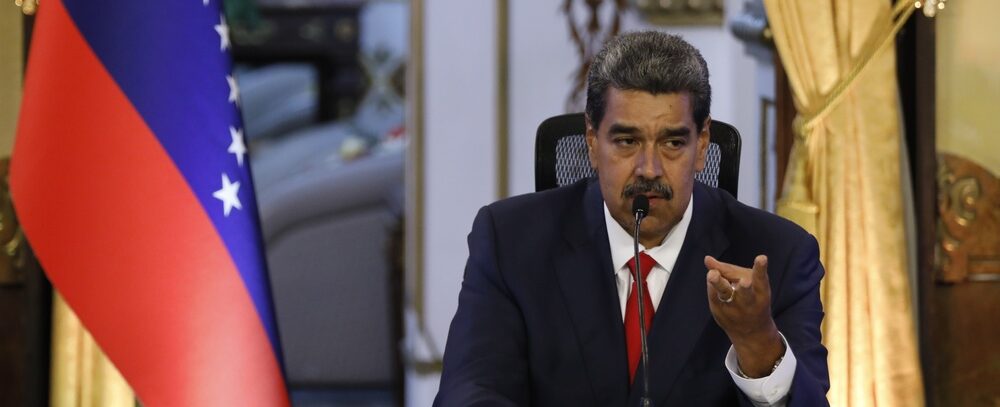
Is Nicolás Maduro’s capture and extradition a geopolitical “win” or something more complicated?
On January 3, 2026, U.S. forces conducted a large-scale strike in Caracas, Venezuela, resulting in the capture of President Nicolás Maduro and his wife, Cilia Flores. The couple was flown to the United States and appeared in federal court in New York, where they pleaded not guilty to an indictment detailing narco-terrorism and cocaine trafficking charges, originally brought by the American government in 2020.
U.S. officials, including President Donald Trump, described the action as a coordinated law-enforcement and military mission to bring a fugitive leader to justice, characterizing Maduro’s alleged role in drug trafficking as a threat to U.S. national security and the rule of law. Trump stated that the U.S. would help oversee Venezuela’s transition and even “run” aspects of the country temporarily to stabilize it.
Former Vice President Kamala Harris called the military operation “both unlawful and unwise,” even though she admitted in the same social-media post that Maduro was “a brutal, illegitimate dictator.” During his time in the Oval Office, Joe Biden saw Maduro as such a threat that he increased the reward for his capture to $25 million.
The operation was far more than a simple extradition, with military strikes, explosions in several cities, and Venezuelan forces reporting casualties. Maduro’s removal echoes historical U.S. actions such as the 1989 capture of Panamanian dictator Manuel Noriega — though analysts note the 2026 operation was unprecedented in scale and, perhaps, controversy.
Domestic Fallout in Venezuela
Within Venezuela, reactions have been mixed and tense. Vice President Delcy Rodríguez was quickly sworn in as acting president, calling Maduro’s capture a “kidnapping” and decriing U.S. actions as an illegal assault on sovereignty.
The Venezuelan state declared a national emergency, even as video began circulating on social media of widespread celebrations that the Maduro regime had fallen. The U.S. continues efforts to cooperate with the new government, illustrating the practical need for collaboration despite some rhetorical hostility.
International Response: Support and Backlash
The Maduro operation quickly drew widespread diplomatic controversy. Many Latin American governments — from Brazil and Mexico to Chile and Colombia — condemned the U.S. incursion as a violation of sovereignty and international law, urging peaceful solutions and multilateral engagement.
China and Russia also publicly criticized Maduro’s capture and extradition, framing it as a dangerous precedent-setting and aggression against a sovereign state. European officials echoed concerns about violating the principle of non-use of force that underpins the United Nations Charter, even if they acknowledged serious problems with Maduro’s governance.
These reactions highlight a broader Southern Hemisphere unease about unilateral military interventions, especially in a region that has sought to distance itself from Cold War-era proxy conflicts. The U.N. Secretary-General and international legal scholars have warned that such actions could erode long-standing norms protecting state sovereignty.
Is It a “Victory” for the United States?
The short answer is “Yes.” The U.S. won in some tactical senses — but not without strategic cost.
✔ Legal action against Maduro: The Trump administration achieved what few nations have: a sitting head of state facing judicial process in U.S. courts on serious criminal charges. For prosecutors and supporters of strong narcotics enforcement, that signals accountability for alleged decades-long criminal activity.
✔ Pressure on Venezuelan oil infrastructure: The operation dovetails with broader U.S. efforts to disrupt networks accused of sanction-evasion and drug trafficking. American forces have recently seized seven oil tankers linked to Venezuela that were suspected of providing crude to U.S. adversaries, including China and Russia.
Some legal scholars dispute the legitimacy of using military force without a U.N. mandate or clear self-defense rationale, and officials from allied nations have publicly challenged the operation’s compliance with international law.
Moreover, U.S. claims that it would “run” Venezuela, even temporarily, invited accusations of neo-imperialism and raised questions about constitutional processes governing the use of force — especially since Congress was not consulted in advance.
What Maduro’s Exit Means for Venezuela and the Region
For ordinary Venezuelans — battered by years of economic collapse, hyperinflation, and authoritarian governance — Maduro’s ouster may fuel renewed hope for democratic renewal with elections and reconstruction. Some diaspora communities celebrated his removal, viewing it as a long-overdue change.
Yet structural instability persists. Acting leaders like Rodríguez now face the dual challenge of asserting legitimacy at home and engaging diplomatically abroad. Regional powers remain skeptical of U.S. intentions, and Venezuela’s future hinges on whether a domestic political consensus can be forged without external pressure dictating outcomes.
A “Wag the Dog” Moment for Trump?
No. The Maduro operation was a tactical win for U.S. law enforcement and an unprecedented disruption of an authoritarian regime accused of transnational narcoterrorism. But it also was a strategic gamble, risking diplomatic isolation, legal controversy, and long-term instability if not tethered to coherent, multilateral policies.
Whether it ultimately strengthens democracy in Venezuela or becomes a cautionary tale of foreign intervention depends on what comes next. Free and fair elections, international cooperation, respect for sovereignty, and genuine inclusion of Venezuelan voices will best determine the nation’s future.
Sources: