War is Not Hell; Hell is Much Worse
Editor's Note: The views and opinions expressed in this article are those of the author and do not necessarily reflect the official policy or position of Regent University, its faculty, administration, or affiliates.
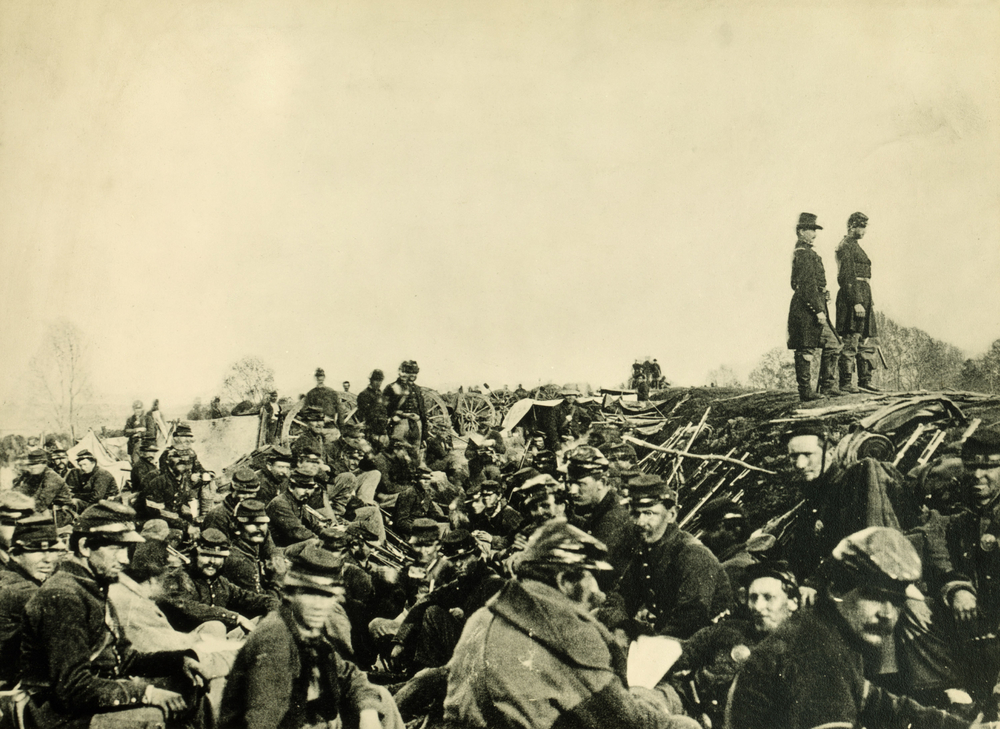
In September 1864, General William Tecumseh Sherman led the fierce destruction of Atlanta during the Civil War (Geib, 2026). Despite pleas from senior leaders of the city that these actions would be calamitous to the citizens, especially the elderly and pregnant women, Sherman said in an address to the mayor and councilmen of Atlanta, “You cannot qualify war in harsher terms than I will. War is cruelty, and you cannot refine it… You might as well appeal against the thunderstorm as against these terrible hardships of war. They are inevitable” (Geib, 2026). Years later, in an address to the cadets at the Michigan Military Academy, Sherman shortened his sentiments about war by famously saying, “War is hell” (Ohio History Connection, 2017).
A report released in 2025 indicated that 2024 marked the highest number of state-based armed conflicts in more than seven decades (Rustad, 2025). An extraordinary number of wars and violent conflicts were recorded across 36 countries in 2024 (Rustad, 2025). According to this report, the level of violence was higher than the average for the past three decades. The report said 2024 was the fourth most deadly year since the Cold War ended in 1989 (Rustad, 2025).
According to several peace-oriented websites (Charpentier, 2017; Shah, 2022), the United States has been at war for some 92-93% of its history. The authors of these articles clearly have an agenda, yet the perspective remains intriguing given the sheer frequency of U.S. military engagement since its founding: whether directed towards an enemy, in a defensive posture, or in an alliance with other nations, such as World War II.
While the Selective Service System had been in place since 1917 (Selective Service System, 2026), protests about unfair deferments and an unjust war led to the cessation of the induction process on June 30, 1973, a few months before my 18th birthday. The draft was ending, and I was relieved and thankful about that. In the 1970s, no one was voluntarily enlisting to go to an unpopular war. So, I avoided being sent to Vietnam and wound up missing out on any military service, as Selective Service registration was suspended soon afterwards (Selective Service System, 2026).
While I may not be qualified to talk about war, except as an observer and a researcher, the same can be said about me regarding hell. I have not been to hell, although I have been told several times that I should go there. I am not qualified to talk about hell if it requires experience. Like war, I can only write about it as an observer and a researcher. But based on the facts and comparison, war is certainly not Hell — Hell is much worse.
Carl von Clausewitz was a Prussian general and military thinker (The Editors of Encyclopedia Britannica, 2026). Clausewitz penned a timeless work entitled “On War,” which has become one of the most respected classics on military strategy. Military expert Hugh Smith, writing in a special edition of Military Strategy Magazine (Smith, 2020), quotes Clausewitz’s definition of war, saying “War is nothing but a duel on a larger scale; a physical contest between people, each using force to compel our enemy to do our will” (Smith, 2020).
Based on this definition, war is certainly not Hell. Hell is not “a clash between major interests” (Smith, 2020) with mobilized political forces using weapons of death and destruction to impose their will. Hell is not an instrument of policy (Smith, 2020), as the world has seen in the most recent wars in Ukraine and Iran. Equating war with hell raises a finite, human conflict — governed by political aims and territorial motives — to the level of a much more severe and eternal act of Divine judgment.
So, what is the purpose behind this article? The purpose is that, while one war has horrific effects on both the combatant and the victims of this destruction, hell is a much more insidious and eternally destructive force. Jesus quoted Isaiah 66 when speaking to His disciples of this judgment, saying that in Hell, “Their worm does not die; and the fire is not quenched” (Mark 9:24 ESV). Scripture speak very clearly about the torment in Hell. One parable in Luke 16 (verses 9-31) — while perhaps more allegory than factual description — highlights the pain and anguish that exist there.
But Jesus stating that the worm does not die has a special meaning, which has always been fascinating to me. I believe, based on my reading of parallel passages, this phrase represents guilt, unabated and eternal, for those in this life who have denied Hell and its existence — or the Savior who can set them free from God‘s righteous judgment. If Hell is a place where torment and anguish never cease (Revelation 14:11), how much worse is the internal condemnation for years and decades and millennia for those who chose not to submit to God and His Son (John 3:18). Wars will end — although some persist for many years (see the U.S. war in Afghanistan). But Hell is eternal — and there is no escape once condemned to that judgment.
Jesus himself addressed the reality of war when He spoke to His disciples about the end of the age. In the gospel of Matthew, Christ warned there would be “wars and rumors of wars,” with nation rising against nation, and widespread turmoil (chapter 24:6-8). Yet, He cautioned His followers not to assume such events represented the final judgment, saying plainly, “The end is not yet.” Wars, then, are not Hell itself. Rather, they are reminders of a world fractured by sin and moving inevitably toward Divine accountability.
While we witness the ever-increasing violence of armed conflicts, many of us wonder if that “end of the age” time is near. As horrific as global conflict is, Jesus presents it as a precursor — a warning sign pointing beyond history to a final reckoning, where true and eternal judgment will be rendered. While war belongs to this age; Hell and final judgment belong to the age to come.
War and Hell have one tragic link between them: they both are the consequence of human decisions. No war was ever started spontaneously; a decision to engage in conflict had to be made. Regarding Hell, the consequence of human decision does weigh in. Hell was not prepared for mankind, but rather prepared for the devil and his angels (Matthew 25:41). We are given the opportunity to choose to follow Christ, and to put our lives under His authority (Romans 10:9). Unlike war, where choices and consequences may be restored over time or softened by the span of history, Hell represents choices sealed forever by the rejection of grace.
The author C.S. Lewis wrote about the choice between Heaven and Hell: “There are only two kinds of people in the end: Those who say to God, ‘Thy will be done,’ and those to whom God says, in the end, ‘Thy will be done.’ All that are in Hell, choose it. Without that self-choice, there could be no Hell. No soul that seriously and constantly desires joy will ever miss it. Those who seek find. Those who knock it is opened” (Lewis, 1946).
General Sherman spoke to his audience, the leaders of Atlanta, describing the horrors of war from the perspective of human devastation — a conflict that, “began in error (meaning it should have never stated) and was perpetuated in pride” (Geib, 2026). A person’s route to Hell is built on the same two false premises: My life is my own to choose; and it is up to me on how I live it. Sherman did not give his audience the opportunity to avoid the destruction of their city. He claimed it was a result of the decisions made earlier to engage in the conflict.
Jesus spoke to His audience — both devoted followers and those who sought His demise — and offered the opportunity to repent and to believe in Him (John 3:16). Choosing this path would allow everyone to be saved from Hell and the judgment to come. Unlike Atlanta under Sherman, we have the opportunity to avoid this destruction. God takes no pleasure in the death of those who choose to disregard His offering of redemption (Ezekiel 18:32; 2 Peter 3:9). While every war, even the longest, belongs to world history; Hell belongs to our eternal destiny if we choose not to honor our Savior Jesus and to accept His sacrifice on our behalf (Titus 2:11-14).
Sources:
Charpentier, A. (2017, March 19). The U.S. Has Been at War 222 Out of 239 Years. Freakonometrics. Retrieved from https://doi.org/10.58079/ov76.
Geib, R. J. (2026). Gen. William T. Sherman: Modern war. Richard Geib [Web Blog]. Retrieved from https://www.rjgeib.com/thoughts/sherman/sherman.html.
C. S. Lewis, (1946). The Great Divorce: A Dream. New York: MacMillan Publishing Co.
Ohio History Connection. (2017). War is hell: William Tecumseh Sherman, Atlanta, and the March to the Sea. Ohio Memory. Retrieved from https://ohiomemory.ohiohistory.org/archives/3447.
Rustad, S.A. (2025) Conflict Trends: A Global Overview, 1946–2024. PRIO Paper. Oslo: PRIO. Retrieved from https://www.prio.org/news/3616.
Selective Service System. (2026). Historical timeline. US Government: Selective Service System. Retrieved from https://www.sss.gov/history-and-records/timeline/.
Shah, S. (2022, April 15). The U.S. has been at war 225 out of 243 years since 1776. Transnational. Retrieved from https://transnational.live/2022/04/15/the-us-has-been-at-war-225-out-of-243-years-since-1776/.
Smith, H. (2020). Clausewitz’s Definition of War and its Limits. Military Strategy Magazine, Special Edition, “The Continuing Relevance of Clausewitz” (pp. 9-14). https://doi.org/10.64148/msm.article.943.
The Editors of Encyclopedia Britannica. (2026). Carl von Clausewitz. Encyclopedia Britannica. Retrieved from https://www.britannica.com/biography/Carl-von-Clausewitz.