What Is Maundy Thursday? The Commands That Have Kept the Church Moving Forward
Editor's Note: The views and opinions expressed in this article are those of the author and do not necessarily reflect the official policy or position of Regent University, its faculty, administration, or affiliates.
Picture the scene: a small band of renegades is hiding from the authorities. They are huddling in an upper room, risking their lives to gather together in hostile territory. They are defenseless, in the sense of lacking true offensive weapons, having only two swords (Luke 22:35–38). They have no significant weaponry and no noticeable armor. The only map they have to guide their escape is the testimony of ancient writers — prophets they were called — but most of their direction described a future far-off kingdom which did not appear to have relevance to the desperate situation at hand. By the following evening, their Leader will have passed on, crucified by the same enemies now out to get them. If their Leader couldn’t escape His own destruction, how would they stand a chance?
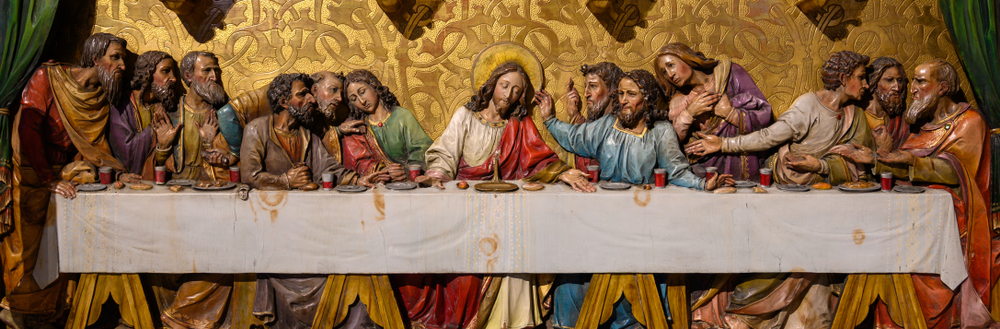
What odds would you give this disorganized band of dissimilar personalities to make it out alive? Not very good, honestly. But this is no ordinary “Band of Brothers.” This is the organizational meeting for the Army of God, led by King Jesus, commissioned to go into all the world and preach the gospel to every nation (Matthew 28:19; Mark 16:15). So how did their Leader prepare them, besides giving them three years’ worth of instruction? This did not seem to be so effective on this night, since they were still bickering around the dinner table regarding which one of them would be the greatest (Luke 22:24). On the last night of His life, their Lord and Master (John 13:13) gave them specific directions — actually, He gave them specific commands to follow (see John’s gospel, chapter 13).
That is the significance of this day that we call “Maundy Thursday.” Maundy Thursday gets its name from the Latin word mandatum, meaning “command” (Crain, 2026). Jesus, their Commander-in-Chief, gave specific commands to the men assembled in the room that evening. The application of these specific commands is what has kept the church focused and prospering in the midst of a hostile world ever since that very evening. We do a great disservice to our Savior and His small collection of overwhelmed followers if we consider Maundy Thursday as a series of manageable Christian rituals — repeated now not as foot washing but as shoe-polishing and other stale reflections — rather than with the force of unyielding commands from a superior officer, delivered with the authority they carried.
Maundy Thursday is often seen as simply one command that Jesus gave to His disciples. He said it like this in John’s gospel, chapter 13: “A new commandment I give to you, that you love one another: just as I have loved you, you also are to love one another” (John 13:34 ESV). Actually, at that evening meal, through the unveiling of the Passover supper as a symbol of His own sacrificial life as the Lamb of God (John 1:29), Jesus gave a series of commands which have kept His church and His followers moving forward toward their heavenly destination, to be once again united with Him (John 14:3).
The first command that He gave to His disciples had to do with how they would lead each other into this eternal battle of good versus evil (John 13:12–20). They could not lead or survive this battle by bickering about who was the greatest, or who would be the greatest in a kingdom about which they had no idea. Jesus told them that if He, as their Sovereign Lord and Master, could wash their feet — the job of the lowest of the low servants — then they would inspire each other and their followers if they acted the same way. This would be their leadership creed: servant leadership. This is how they would lead through this crisis.
The second command was to Judas (John 13:21–30). Jesus told Judas to get on with what he had been led by the devil to do. Why is this command important to the church of today? This command represents those who have entertained destructive habits, who have chosen deception rather than going all in with following Christ. Jesus, in another chapter 13 (Matthew 13:18–23), described the different types of soil, representing different hearts, and how the message of the gospel would affect them. Judas represented the third type of heart-soil, allowing the cares of the world and the deceitfulness of riches to choke off this precious gospel message. The reality of the parable told along the field that day was now happening before the eyes of His followers. Who else in this mighty, growing church would be deceived and trade the knowledge of the Son of God and everlasting life for a few coins? God forbid that we would ever follow in this path!
The third command was how they would demonstrate to the world that they were different (John 13:31–35). Following this command would be the glue that would hold them together through constant attack and through incredibly destructive persecution. They must love each other — not the kind of love that is wishy-washy or that makes pleasant, toe-tapping tunes on the radio, but the kind of love that sustains someone through the most incredibly difficult circumstances: the love that frees us from the fear of persecution (1 John 4:18). God could have abandoned us all and had several opportunities to do just that (see Genesis, chapter 6). But instead, He always preserved a remnant and a plan for the redemption of those devoted to Him (Romans 11:2–5).
The fourth command that Jesus gave that night was for the disciples there, and for those of us who follow in their footsteps, to remember His sacrifice (Luke 22:14–20). This was the reality of their redemption — the Paschal Lamb, now in the flesh (1 Corinthians 5:7), giving His life for all who would trust in Him (Romans 10:9). “Do this in remembrance of me!” (Luke 22:19). When times are tough, when the enemy is attacking, when we lose those closest to us through cancer or some incredible tragedy, when we are fired from our job after standing up for what we believe — what memory would keep us on point and mindful of what Jesus had done? We needed to remember His sacrifice: not simply wafer and grape juice, or bread and wine, but a sinless Life, from eternal glory, embodied now in the form of His disgraced creation, standing in for us who really deserved this punishment!
By this time tomorrow, He would give His life for them — for us! Later that night, He promised that He was going to prepare a place for us (John 14:2). He said that He would be with us always (Matthew 28:20). He said that He would not abandon or forsake us (Hebrews 13:5). But we must follow the commands of our Commander-in-Chief. We must stay focused on the task at hand, and not let the distractions of this world and the rituals of our church experience become trite or a parody of what actually happened in that upper room.
This was life or death — for Jesus, certainly, and ultimately for every man who was in that room at that table with Him that night. This has been a life-and-death message throughout the centuries, and it is more critical today than ever. We cry out to our merciful God to come against the slaughter of Christians in Nigeria and elsewhere, and for others in the faith who are facing the most incredible trials, persecution, and death. This was the message in the upper room that Maundy Thursday — the world is coming for you… and things will get very difficult. But keep serving, even those who hate you (Matthew 5:44); endure suffering and pursue the truth — do not be distracted by the temptations of this world (2 Timothy 2:1–7). Love one another deeply (1 Peter 4:8); and remember what Jesus did for you (Colossians 2:13–14)!
We must not forget to honor the commands of our Commander-in-Chief. As true soldiers, we take our orders directly from our Lord and Master, wading into battle with a clear-eyed realism. Maundy Thursday does not teach soldiers simply how to win. This day of remembrance teaches us how to remain faithful to the calling that is on our lives as followers of Christ. We go forward, facing the obstacles, not concerned about the lack of physical weapons. “The weapons we fight with are not the weapons of the world. On the contrary, they have divine power to demolish strongholds… we demolish arguments and every pretension that sets itself up against the knowledge of God” (2 Corinthians 10:4–5). We put on “the whole armor of God, that [we] may be able to stand against the schemes of the devil” (Ephesians 6:11). We remember this night, because failing to remember is not an option. We will not fail, because our Commander-in-Chief is with us (Matthew 28:20)!
Sources:
Crain, A. (2026, April 1). What is Maundy Thursday? Christianity.com [Web Blog]. Retrieved from https://www.christianity.com/wiki/holidays/what-is-maundy-thursday-11628350.html.