2026 Winter Olympics: Team USA’s Historic Gold Medal Run and the Divide That Followed
Editor's Note: The views and opinions expressed in this article are those of the author and do not necessarily reflect the official policy or position of Regent University, its faculty, administration, or affiliates.
Unity and Division at the Winter Olympics
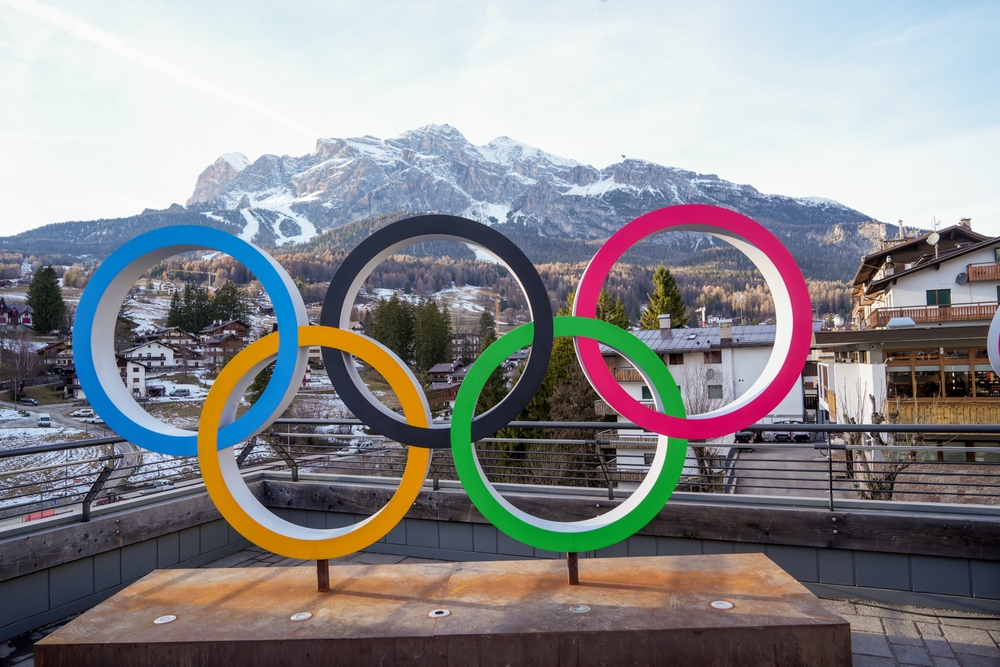
February 2026 saw the open and close of the XXV Winter Olympics, held in two Italian cities, Milan and Cortina d’Ampezzo. Russia was excluded from these Games because of the Ukraine war started in 2022, but the Games soldiered on, presenting two weeks of excitement with a mix of both old and new. It’s hard to beat old favorites such as Andrea Bocelli’s singing “Nessun Dorma.” One new feature was the widespread use of first-person view racing drones to capture the activities, although it might take a year or two to eliminate the sounds, which are reminiscent of dentist drills. And one new sport appeared this year: ski mountaineering (or skimo), an event in which athletes combine uphill climbing and downhill racing, all in the snow, of course, causing some to joke that we finally have a sport representing how our grandparents used to get to school.
And despite some controversy over a few U.S. athletes’ comments about having “mixed emotions” representing their country (with some people staging an anti-ICE rally in Milan), Team USA earned a historic twelve gold medals at this Olympiad, more than it has ever earned before at the Winter Games. Unsurprisingly, Norway won the medal count, earning the most golds (18) and the most total (41), but the U.S. was second in both (12 and 33, respectively). Just a few of the individual gold medalists for the U.S. this year included Breezy Johnson (downhill), Jordan Stolz (speedskating), Elana Meyers Taylor (monobob), Mikaela Shiffrin (slalom), and Alysa Liu (figure skating).
As was to be expected, the Olympics was not without its share of drama and disappointments. Ski jumping had its own scandal with some athletes inventing creative ways to gain a few inches, and the curling quarrel between Sweden and Canada resulted in an avalanche of memes. Freestyle skier Eileen Gu, born in San Francisco and raised in the U.S., chose to compete for China, the native home of her mother. While dual citizenship is always complicated when it comes to Olympic athletes, Gu has received millions of dollars from the Chinese government, and her story contrasts sharply with that of Alysa Liu, whose father immigrated to the U.S. from China after speaking out against the Tiananmen Square massacre in 1989. Gu and Liu both won gold medals, but only Liu has been thoroughly praised as a U.S. inspiration.
Downhill skier Lindsey Vonn, now 41 years old, had an impressive comeback story, having retired in 2019 and undergone partial knee replacement just two years ago. Amazingly, she came out of retirement and qualified for her fifth Olympics. But in late January she tore her ACL while training in Switzerland. Then, a little more than a week later and a mere thirteen seconds into her Olympic event, she crashed so severely on the course that her left leg almost required amputation.
Another disappointing performance was the Titanic of the Winter Olympics: U.S. men’s figure skater Ilia Malinin, self-described as the “Quad God” because of his unique ability to land a quadruple axel. Malinin, age 21 and the undisputed best-in-the-world figure skater for the last several years, also included an impressive backflip in some of his routines. But the gold medal favorite fell twice in his men’s singles free skate event, ultimately sinking to eighth place. He didn’t leave the ice completely empty-handed, having won gold for team figure skating, but aiming for two gold medals surely left him feeling as if one hand were empty.
As the “mixed emotions” comments made clear, the U.S. has had problems with ice in more ways than one. And where our national division has appeared most glaringly in recent days has been the men’s hockey team and the aftermath of winning the gold medal. One notorious article, published by HuffPost, suggested that citizens experiencing cognitive dissonance (feeling torn between national pride and shame because of the turmoil in the States) take advice from multiple therapists: name the tension, take deep breaths, focus on the individuals instead of the country, and maybe even turn off the television.
USA Today also expressed big feelings about the perceived failure of the men’s hockey team to appreciate the delicate nature of their political situation. How exactly had these athletes compromised their character and squandered a cultural moment? By accepting President Trump’s invitation to the State of the Union Address.
Their gold medal, by many accounts, should have been a nation-unifying event. The men’s ice hockey final is the traditional centerpiece of the last day of the Games, taking place just before the closing ceremonies. Figure skating is graceful and powerful, and halfpipe tricks are fun, but ice hockey is sustained action: fast, physical, and often filled with “extracurricular activities,” as the sportscasters enjoy saying. Everyone loves it.
Not only is the sport inherently exciting, but this particular game was historic in many ways. It was Canada vs. the U.S., which brings its own unique mixture of rivalry to the event. U.S. hockey has long been described as the younger brother of the Canadians, who invented the sport in Montreal about 150 years ago. But through an organized system of youth development, the U.S. has slowly pulled alongside the Canadians. Famously, in 1980 (and forty-six years to the day of the gold-medal match in 2026), the “miracle on ice” captivated a nation as the men’s ice hockey team defeated the Soviet team in a semi-final—a team that had won the previous four gold medals. The men went on to win gold against Finland, and the overall accomplishment was commemorated in a 2004 film. The men’s team hadn’t won gold since, and they had won gold only once before 1980, in 1960, despite having won silver a handful of times before that.
But this year was different. This time it was neither a semi-final nor a Soviet team. It was a gold-medal match against our next-door neighbor with whom we have recently had a rocky relationship because of tariff drama, not to mention presidential comments about annexing Canada as a U.S. state. Last February, at the 4 Nations Face-Off, Canadian fans booed the U.S. National Anthem before the championship game, which began with three fights in the first nine seconds. Canada won 3-2 in overtime—in Boston—and afterwards Prime Minister Justin Trudeau tweeted, “You can’t take our country — and you can’t take our game.”
But take the game we did in 2026, both men’s and women’s teams: both against Canada, both in overtime, both for the gold medal—the first time this has ever happened. (The 2024 Summer Olympics saw a similar phenomenon, with both men’s and women’s basketball teams winning gold against the same nation.) The U.S. women’s ice hockey team, which has medaled in every Winter Olympics since the women’s sport first officially entered the Games in 1998, provided a nail-biter of a game, ultimately pulling their goalie and playing with an empty net, and not scoring the game-tying goal (by Hilary Knight) until about two minutes left in the third period. The U.S. women won in overtime off a goal by Megan Keller.
The men’s game was no less thrilling, peaking at 26 million live viewers. It was the most-watched game with an early-morning start time in U.S. history, and the second-most watched hockey game in history for NBC. It is true that Team Canada played without their star Sidney Crosby, who was out with a lower body injury, and some people (i.e., Canadians) have claimed that Canada clearly had the better team, despite their loss. But Canada had multiple breakaway and open-net opportunities, a 5-on-3 power play that lasted more than a minute and a half, a rising superstar in nineteen-year-old Macklin Celebrini (the leading goal-scorer in the Olympics), and arguably three of the best hockey players in the world (Connor McDavid, Nathan MacKinnon, and Cale Makar)—and Team Canada still couldn’t get the job done.
The U.S. players were ready. No one disagrees that the resulting gold was largely due to the heroics of U.S. goalie Connor Hellebuyck, who made an amazing forty-one saves. But it wasn’t Hellebuyck who scored. Matt Boldy opened the scoring in the first six minutes of the game with a nifty move to split two defenders and beat Canadian goalie Binnington. Jack Hughes lost multiple teeth in the third period from a high stick to the face. In true ice hockey fashion, when Hughes scored the golden goal in overtime, the team celebrated by immediately checking their hero into the glass (see 1:20).
Hughes’s bloody, toothless smile as he draped the U.S. flag over his shoulders gave off vibes similar to Trump’s raised-fist photo from Butler, PA—confident, determined, resilient, American. The Johnny Gaudreau story further heightened the emotion. Gaudreau, known as “Johnny Hockey,” died in 2024 while biking with his brother. They were both hit and killed by a suspected drunk driver on the night before their sister’s wedding. Because Johnny had been expected to make the Olympic team, after the win his likely teammates brought his two young children onto the ice for a photo, holding up Johnny’s jersey to honor him. Overall, the U.S. successes seemed to gather moments that the entire country could rally around.
And yet. Not everyone was pleased by Jack Hughes’s full-throated patriotism in his post-game interview: “This is all about our country right now. I love the USA. . . . I’m so proud to be American today.” The team was clearly delighted to speak with President Trump via phone after the game. The White House trolled Canada on social media with a spicy picture of an eagle overpowering a goose. The men’s team accepted the President’s invitation to the State of the Union Address, while the women’s team declined. During the speech, President Trump promised that Hellebuyck would receive the Presidential Medal of Freedom. Unfortunately, these actions led to national squabbling, including performative disturbances during the national address, from Democratic boycotts of the entire speech to refusals to stand or applaud for the men’s hockey team.
It would be nice to believe the men’s hockey head coach, Mike Sullivan, who told the team before the game that “the whole country is behind you.” It would be nice to believe NBC primetime host Mike Tirico’s inspirational message that the image of a draped American flag draws us in and that sports is “one of the few things that can still truly pull us together.” There is a distinct pleasure in national unity in sports—feeling like a team. But many have expressed discouragement, because it seems like we can’t even come together as a country to celebrate sports anymore. Sometimes it appears that only one side cheers for the national hockey team, while the only hockey that the other side can get excited for is Heated Rivalry.
For some reason, it’s tolerable to be “America First” during the Olympics, but such a posture towards anything else is off-putting to those who prefer an open society. But aren’t national sports teams representative of the nation itself—its wealth, hard work, success, etc.? Aren’t sports a form of domesticated war? Surely it’s okay to want the best for our own children, family, church, community, and even nation—not necessarily because we want the worst for everyone else, but because loyalties, dedication, and interests are good and necessary.
Marco Rubio’s recent speech in Munich, given in the middle of the Winter Games, showed that “America First” is not necessarily at the expense of other countries—it simply reflects every country’s goal: achieving the best interests of the citizens. Countries can work together as they protect their people and help them to prosper, and when it does come to placing first over other countries, we should much prefer sports to actual war.
Christians are to take every thought captive (2 Corinthians 10:5), and that language has a very athletic feel to it. We can cheer on athletes as Christians, even wanting certain ones to win over others, without compromising Christian principles. The U.S. co-hosts the World Cup this year, and the Olympic Games are coming to Los Angeles in the summer of 2028, giving us all imminent opportunities to display greatness while practicing good sportsmanship and patriotic unity.